מקרי בוחן
Port of Ashdod: Operations Transformation
In the high-stakes environment of global logistics, speed and precision are the only currencies that matter. Port of Ashdod, a cornerstone of Israel's maritime infrastructure, recognized that while their physical machinery was world-class, their information delivery was lagging behind. Critical operational knowledge was often trapped in silos, failing to reach the technicians on the front lines when they needed it most.
This case study explores the strategic implementation of the Treedis Connected Worker solution - a transformation that bridged the gap between physical space and digital intelligence. By creating a high-fidelity Digital Twin, Port of Ashdod didn't just modernize its maintenance; it created a real-time knowledge hub that empowers every technician with the collective expertise of the entire organization.
"In our Industry, even a minute of crane downtime leads to operational losses and service delays. We needed a solution that matched the pace of our operations" - Nissan Levy, CEO of Port of Ashdod.
Operating one of the region’s busiest cargo hubs requires flawless synchronization. However, Ashdod faced a critical, two-pronged challenge that threatened operational continuity:
- The Experience Gap: A brain drain was imminent. With veteran employees nearing retirement, decades of nuanced, unwritten technical knowledge were at risk of disappearing.
- Diagnostic Deadlocks: Maintenance knowledge was scattered across disparate legacy systems, paper manuals, and individual mental silos. During a breakdown, technicians spent more time searching for answers than actually fixing the equipment.
Elad Yosefi, Head of Crane and Machinery Maintenance, highlights the gravity of the situation:
“In crane maintenance, critical knowledge is scattered across different systems and veteran employees. When someone isn't available, troubleshooting stalls. Every minute a crane is down disrupts the flow and costs the port and our customers significant revenue.”
Ashdod bypassed traditional, text-heavy documentation in favor of a multi-faceted Industry 4.0 strategy. The goal was to move beyond digital records to where the environment itself provides the answers.
The approach centered on three pillars:
- Spatial Mapping: Scanning massive crane structures to create a navigable, pixel-perfect 3D replica.
- Data Integration: Linking IoT sensors and historical documentation directly to the 3D components they represent.
- Contextual Delivery: Shifting the focus from the desk to the field. If a worker is standing in front of a motor, the system should know exactly what information that worker needs in that specific spot.
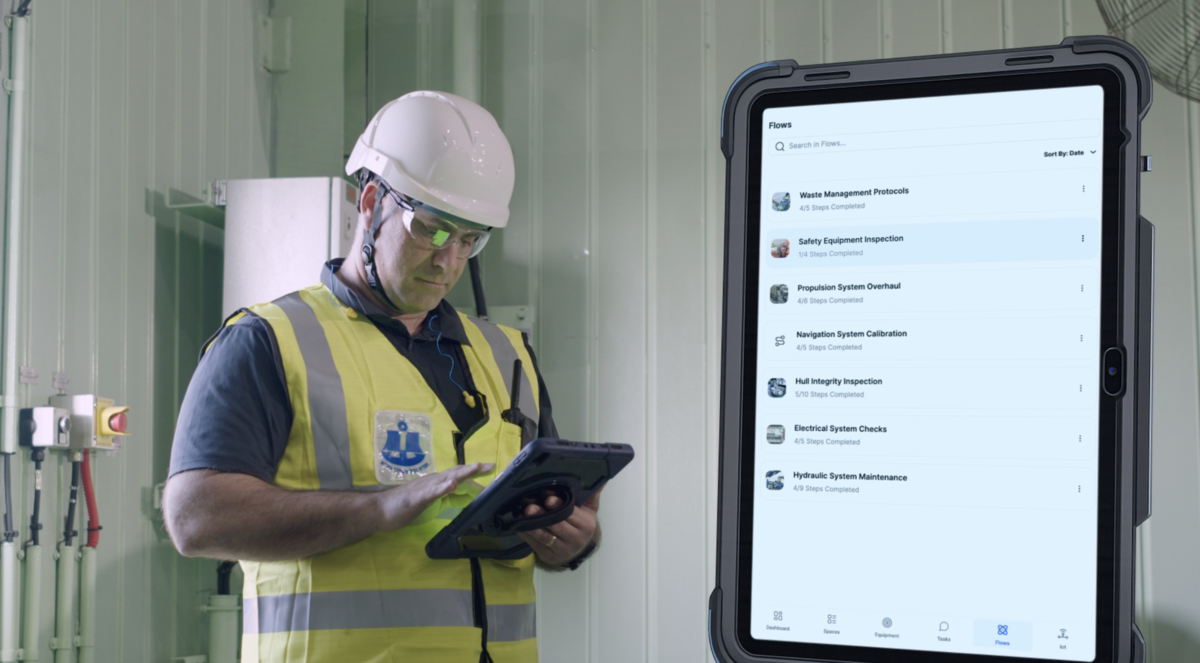
The solution was anchored by the Treedis No-Code Studio, which allowed Ashdod to digitize complex workflows without a dedicated software team. This resulted in a specialized Connected Worker App that serves as the technician’s ultimate field guide.
Key Capabilities:
- AR-Powered Troubleshooting: Technicians use Augmented Reality to see step-by-step repair overlays on the actual machinery, eliminating guesswork and reducing human error.
- Physical AI Knowledge Hub: By integrating all documents and operational data into the 3D interface, technicians can search the physical crane to find technical specs or historical logs instantly.
- Treedis Notes Collaboration: This feature enables location-based digital notes. If a technician discovers a unique workaround or a recurring fault, they leave a digital pin in the 3D space for the next shift.
- Indoor Navigation: In a massive port environment, finding the exact point of failure is half the battle. The system guides workers through complex structures to the precise location of the alert.
"The information is delivered directly to technicians at the point of work. No time is wasted searching. With shared knowledge, every employee follows the same process, ensuring that the next technician can pick up exactly where the previous one left off" - Elad Yosefi.

The pilot program at Ashdod Port didn't just provide "proof of concept" - it provided a radical shift in performance metrics. By unifying knowledge and making it spatially accessible, the port achieved staggering efficiency gains:
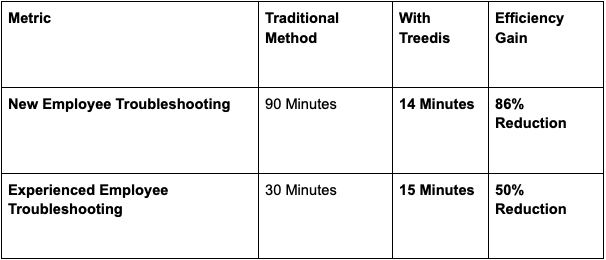
The implementation has fundamentally changed the culture of maintenance at the Port of Ashdod. The fear of the unknown during veteran turnover has been replaced by a stable foundation of digital institutional knowledge.
The success of the pilot has transitioned Treedis from an experimental tool to a core component of the port's future.
"After proving its value in the pilot, Treedis expanded to more cranes and will become a must-have operational standard in the port.” - Nissan Levy, CEO of Port of Ashdod

The Port of Ashdod is one of Israel's primary cargo ports. Situated in Ashdod, approximately 40 kilometers from Tel Aviv. This port's establishment marked a substantial increase in Israel's port capacity and has the distinction of annually handling the largest volume of cargo containers. Experiencing a growing demand, Ashdod Port has incorporated technological advancements into its operations and has inspired other ports around the world.
After proving its value in the pilot, Treedis expanded to more cranes and will become a must-have operational standard in the port.
מקרי בוחן נוספים
%20(1).png)
Granite: Immersive Learning with Digital Twins
Granite Construction leverages Treedis and Matterport solutions to deliver immersive training experiences at their sites.
%20(3).png)
Treedis Introduces AR Wayfinding at UNWE
Treedis implemented Augmented Reality for way finding at UNWE.

Treedis Advances OneSight's Global Outreach
Treedis enabled immersive virtual tours for OneSight's global clinics, boosting volunteer and donor engagement.